Before joining Giving What We Can, I spent five years in East Africa, first with a major NGO in Kenya and later as a UN peacekeeper in Somalia.
Even after a decade in international development, this was the first time I truly felt how unequal our world is.
I saw incredible resilience, but also heartbreaking tragedy: mothers losing children to diseases long eradicated in richer countries, simply because they couldn’t afford basic medicines.
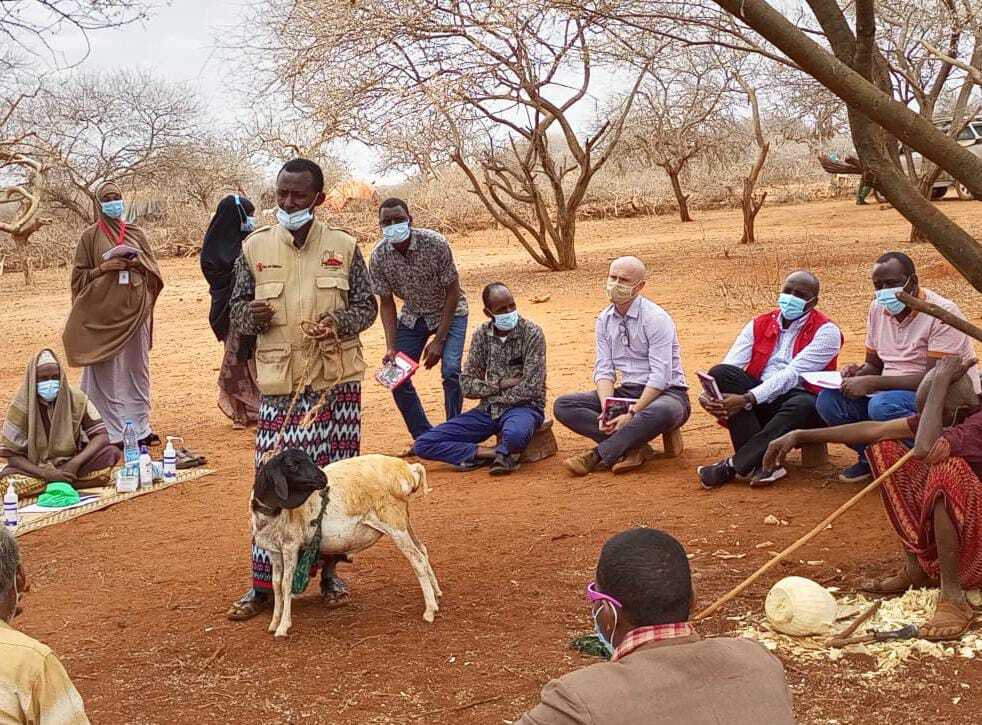
Above: Me at a community visit in Wajir, Northern Kenya during a drought in 2021.
My experience in Kenya and Somalia changed the way I approached giving. While overseas, I took the 🔹Trial Pledge and then 6 months later, the 🔸10% Pledge.
But the moral philosopher who founded Giving What We Can didn't need such a visceral experience — for him, it was enough just to know that others were suffering. His story completely reshaped how I think about impact.
Toby's story
Ten years before I landed in Nairobi for the first time, a PhD student at Oxford University was wrestling with a question familiar to many: what does it mean to be a good person?
If we are able to help others at little cost to ourselves, then we should do that.
Toby wasn’t swimming in money – he was a university researcher working on a PhD. But he had a nagging suspicion that even a few pounds here and there might make a world of difference to someone who needed it.
To see if he was right, he dug into the research. And he discovered something incredible.
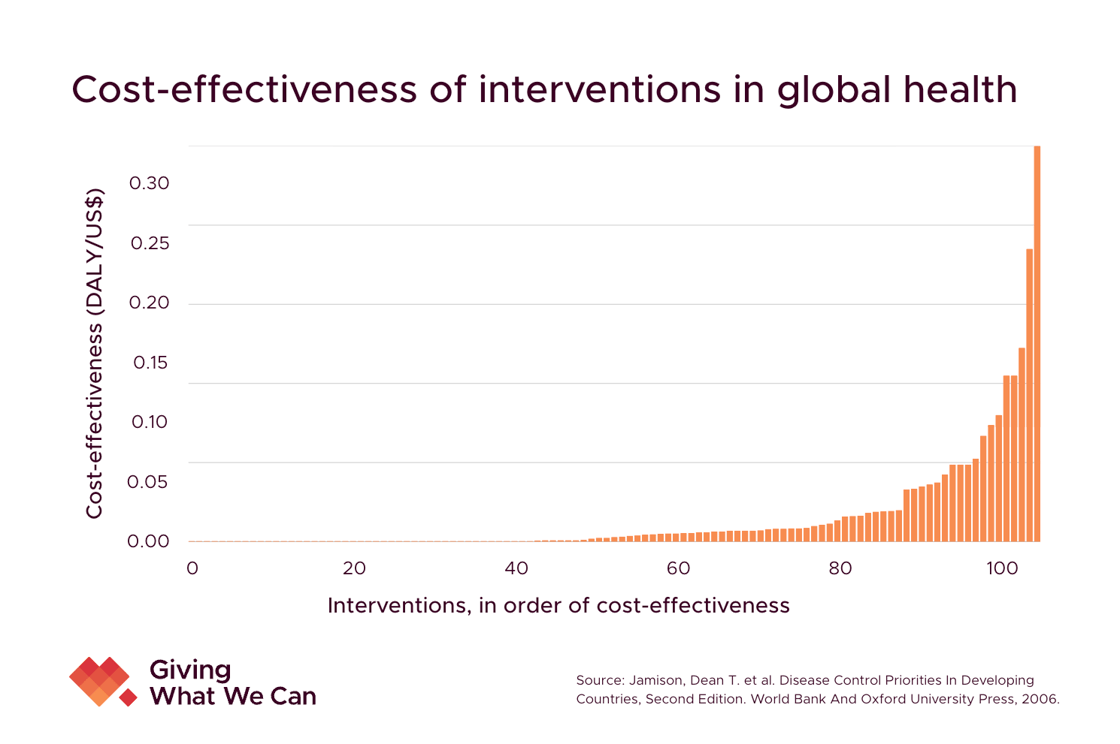
Above: Data from the Disease Control Priorities Report (DCP2), a massive collaborative effort of hundreds of global health experts that evaluated different ways to combat disease and death in low and middle income countries, and compared the cost.
The best ways of helping others (at least within the area of global health) were thousands of times better than the worst.
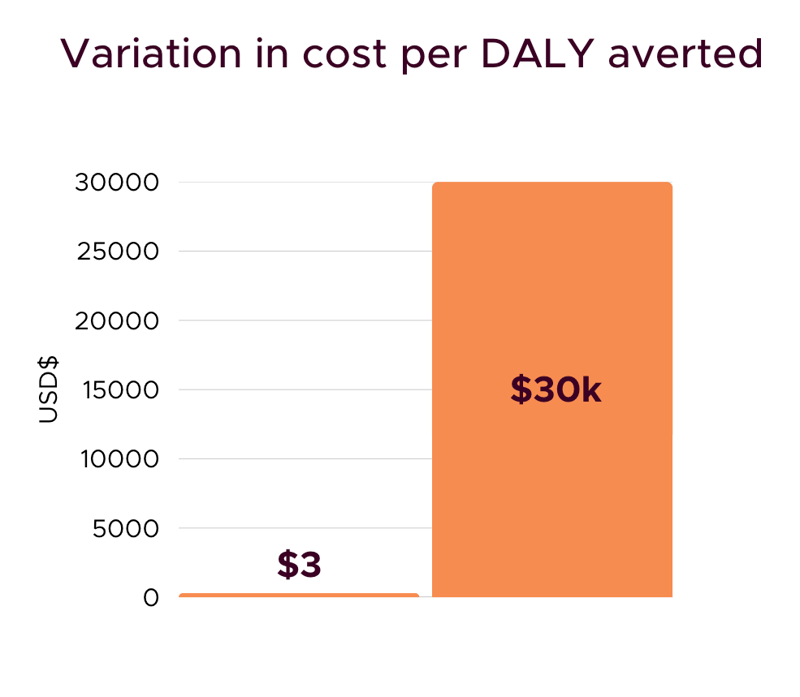
For example, some interventions could deliver a year of healthy life for about $3. Others delivered the same result for $30,000.
Toby realised that he could deliver a whole year of healthy life to someone who was struggling — for about the cost of a beer or a cup of coffee!
This knowledge could have filled him with guilt. But instead, he saw it as an opportunity to live life in accordance with his deepest values.
Check out Toby’s story as portrayed on BBC News back in 2010, a year after he started Giving What We Can!
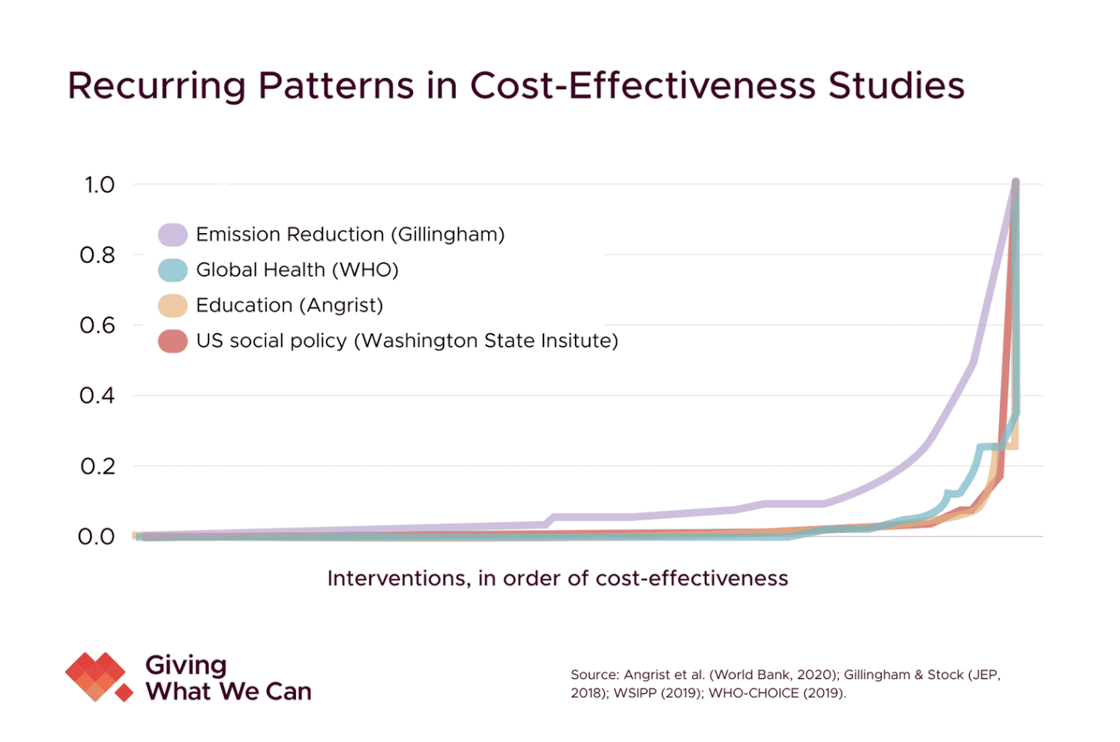
More recent research has suggested that the Disease Control Priorities data likely overestimates the differences in program costs, at least by a little. But the two principles that changed Toby’s life hold true:
The same donation could affect one life a little, or many lives a lot. No matter how much you choose to give, you can have orders of magnitude more impact simply by choosing the best programs.
I’ll talk more about the two principles above – and the values they embody – next time. In the meantime, if you’ve ever wondered whether ordinary people like us can truly have an impact, I think you’ll find this article thought-provoking.





.png?height=40&upscale=true&name=Untitled%20design%20(69).png)